
What
I aspire to make the highest-quality aluminum guitars possible
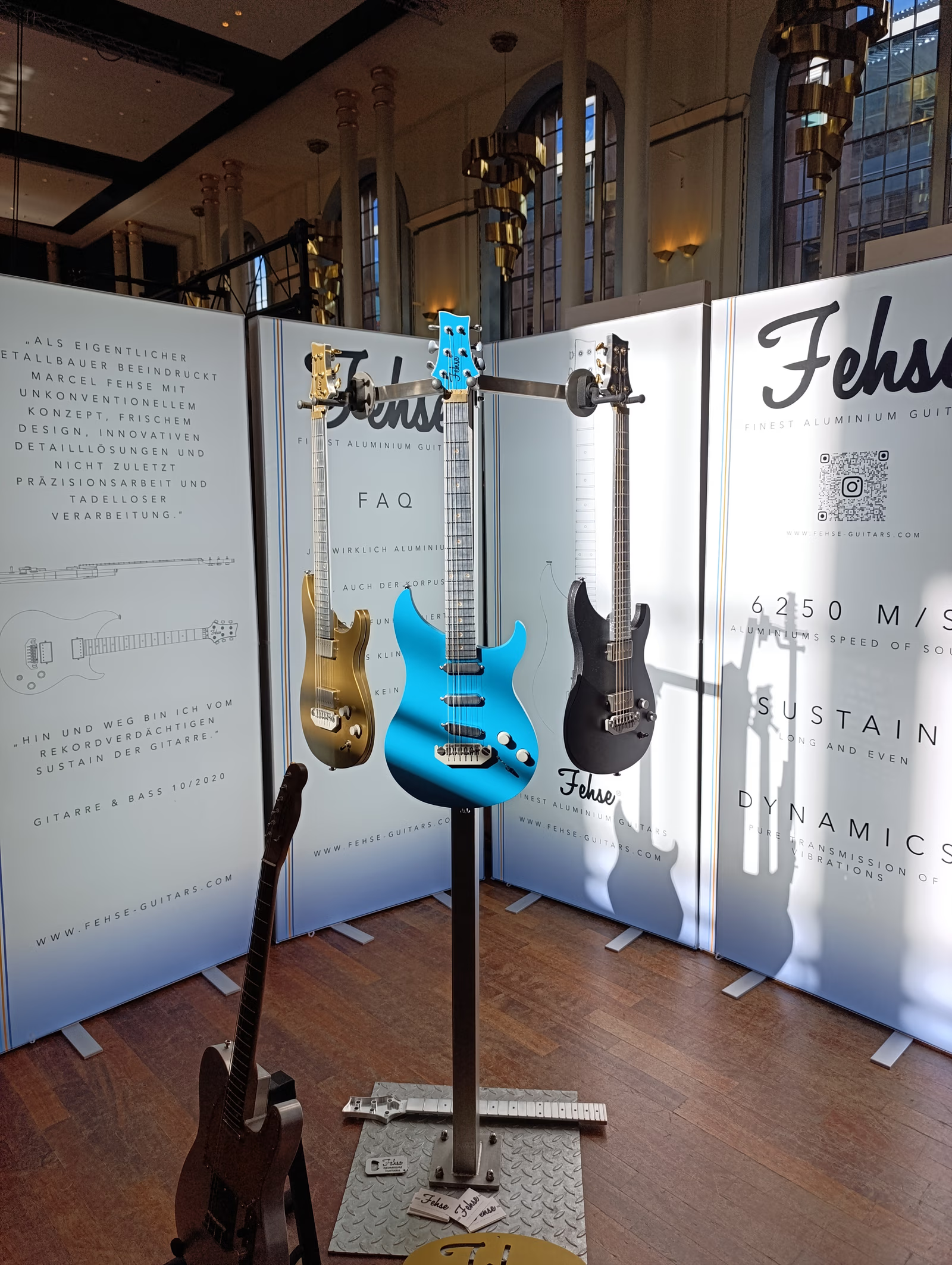
I want players to see, feel and hear the deep thought and work that went into every single feature. I want to convince guitar players that materials other than wood are not a mere possibility, but open up new possibilities — in design, sound, and playability.
I want players to see, feel and hear the deep thought and work that went into every single feature. I want to convince guitar players that materials other than wood are not a mere possibility, but open up new possibilities — in design, sound, and playability.
Why
The question “why” lies at the heart of what I do
Why even build a guitar in the first place? In today’s market, with its many incredible offerings, there are only two valid reasons to build a guitar, in my humble opinion: to do it better, or to do it differently — ideally both. I strive for both, and believe I have succeeded.
Why aluminum? As a professional metal-worker, it only felt natural to explore these materials. When I started out, the few aluminum guitars that existed were clunky, heavy, and often did nothing differently from regular wooden guitars other than being made of aluminum. I wanted to prove that non-wood materials aren’t merely a gimmick. So my journey began.
Aluminum not only gives a guitar a very distinct look and feel but it also is much, much more precise. This incredible exactness can be used to achieve a playability unheard of, and to implement construction details that are simply not possible with wood.
It is very important to me for people to understand that aluminum is not a “dead” material. It moves with temperature (humidity is luckily irrelevant) and it is rarely perfectly uniform like for example some kinds of plastic can be. And although a lot of work goes into & “purifying”, metals ultimately come from nature and are in use for millenia.
Why even build a guitar in the first place? In today’s market, with its many incredible offerings, there are only two valid reasons to build a guitar, in my humble opinion: to do it better, or to do it differently — ideally both. I strive for both, and believe I have succeeded.
Why aluminum? As a professional metal-worker, it only felt natural to explore these materials. When I started out, the few aluminum guitars that existed were clunky, heavy, and often did nothing differently from regular wooden guitars other than being made of aluminum. I wanted to prove that non-wood materials aren’t merely a gimmick. So my journey began.
Aluminum not only gives a guitar a very distinct look and feel but it also is much, much more precise. This incredible exactness can be used to achieve a playability unheard of, and to implement construction details that are simply not possible with wood.
It is very important to me for people to understand that aluminum is not a “dead” material. It moves with temperature (humidity is luckily irrelevant) and it is rarely perfectly uniform like for example some kinds of plastic can be. And although a lot of work goes into & “purifying”, metals ultimately come from nature and are in use for millenia.
Who
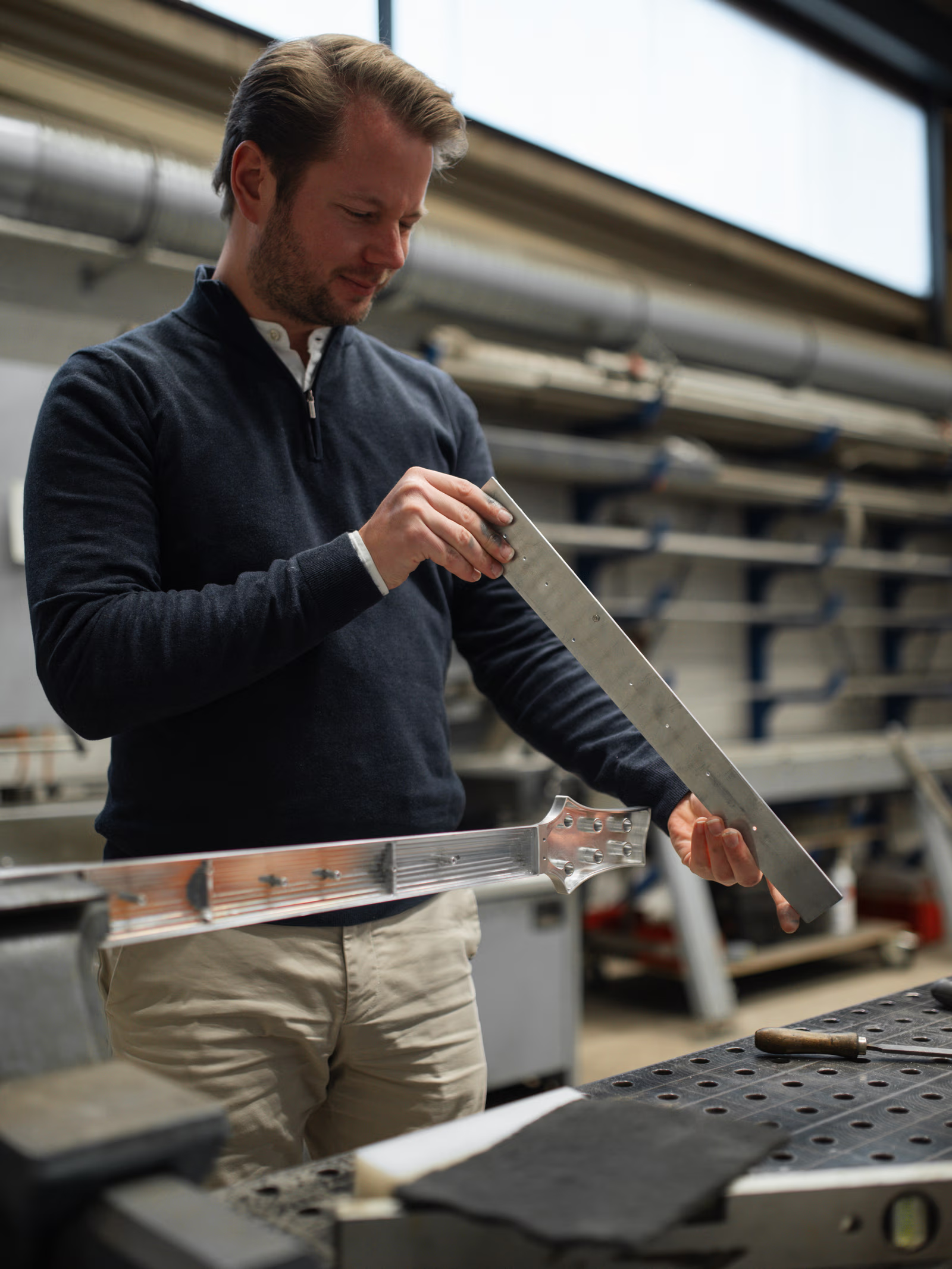
I, Marcel Fehse, am a metal-worker born and raised in Obernkirchen, Lower Saxony, Germany
I still live and work in my hometown today. At 15, I started playing guitar, and soon my passion for the instruments themselves became bigger than my passion for playing. I spent so much time building and improving my aluminum guitars that I barely had time to practice. But I’m still a guitarist, and I can judge instruments accordingly.
The first prototype — still clunky and heavy — I created in 2008 during my metal-working apprenticeship. In 2011, I became a certified master metal-worker (Meister, a formal German title, not a self-description!), gained a bit more professional experience, and then returned to the company where I learned the trade… and bought it. Since 2008 I have continuosly developed my guitars, mostly late in the evening, as running my metal-working firm takes up most of my time.
Since that very first prototype, my guitars and I have come a long way. And the journey is far from over: I’m looking forward to many more prototypes, improvements, and like-minded enthusiasts who are just as excited about innovative guitars as I am.
I still live and work in my hometown today. At 15, I started playing guitar, and soon my passion for the instruments themselves became bigger than my passion for playing. I spent so much time building and improving my aluminum guitars that I barely had time to practice. But I’m still a guitarist, and I can judge instruments accordingly.
The first prototype — still clunky and heavy — I created in 2008 during my metal-working apprenticeship. In 2011, I became a certified master metal-worker (Meister, a formal German title, not a self-description!), gained a bit more professional experience, and then returned to the company where I learned the trade… and bought it. Since 2008 I have continuosly developed my guitars, mostly late in the evening, as running my metal-working firm takes up most of my time.
Since that very first prototype, my guitars and I have come a long way. And the journey is far from over: I’m looking forward to many more prototypes, improvements, and like-minded enthusiasts who are just as excited about innovative guitars as I am.